
LEARN THE SIGNS
SIGNS SOMETIMES SHOWN BY INDIVIDUALS WHO ARE ABUSED OR IMPACTED BY VIOLENCE:
Individuals express their feelings through behaviors and words. Continue to monitor your loved one’s behavior over time; their feelings will change as they move through different developmental stages. If you notice changes you are concerned about, speak with a mental health professional or call the Community Call Line at 612-813-8300.
Adults giving your child special attention, gifts, or introducing them to inappropriate content
Changes in appetite or eating habits
Nightmares or other changes in sleeping patterns
Bed wetting
Sexually inappropriate behavior
Explicit sexual knowledge, behavior, and/or language for their age
Regression in skills or abilities
Anger, aggressiveness
Mood changes; agitation, hyperactivity, irritability, fears, or phobias
Changes in school performance
Withdrawal from others; avoidance of school, friends, or activities
Rebelliousness, lying
Depression, suicide attempts
Unexplained illness; nausea or upset stomach, headache
Frequent genital infections
Delinquent behaviors; truancy, alcohol or drug use, running away
Avoiding the offender or behavior shifts around a specific person
May appear to be going through a “phase”
Change in play habits and the way they treat their playthings, for example:
Change in play habits developmentally
Inappropriate or over-sexualized play
Significant or sudden shift in aggressiveness or consistently aggressive
Always trust your gut, ask questions, and intervene when a relationship or space doesn’t feel safe for your child.
If you have noticed these behaviors and are concerned about a child, adolescent, or vulnerable adult, speak with a mental health professional or call the Community Call Line at 612-813-8300.
You may also contact Child Protection Services to make a report.
Keep EVERY Child Safe:
Child Abuse Prevention Training
1 in 4 girls and 1 in 13 boys will experience some type of abuse or maltreatment by the age of 18. And it happens to children of all ages.
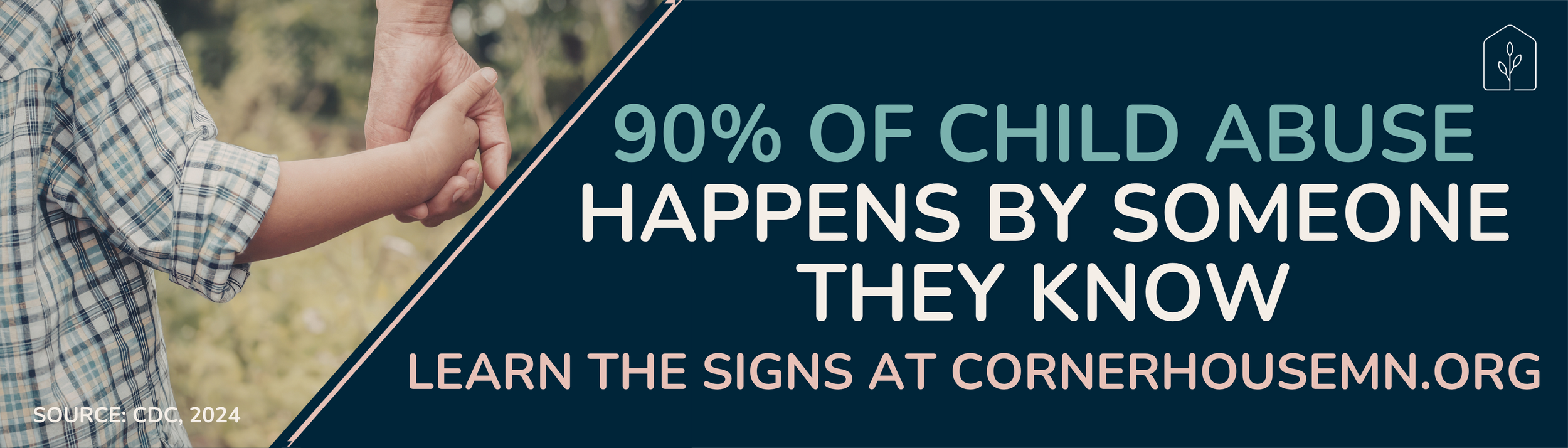
90% of abuse happens at the hands of someone the child knows - at home, sleepovers, sports, camps, carpools, in teen relationships, and more. Learn how to improve a child’s safety when you can’t always be with them.
Assuming that it can't or won't happen to the children in your circle is an unsafe bet. You have the power to keep kids safe.